×

The Standard e-Paper
Join Thousands Daily
 The Standard Group Plc is a
multi-media organization with investments in media platforms spanning newspaper
print operations, television, radio broadcasting, digital and online services. The
Standard Group is recognized as a leading multi-media house in Kenya with a key
influence in matters of national and international interest.

Audio By Vocalize
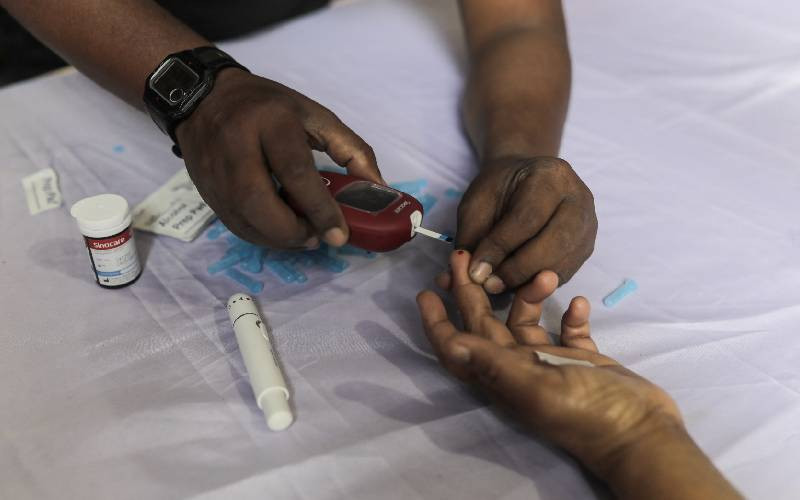
Nearly 440,000 adults in Kenya are living with diabetes without knowing their status, with the high cost of screening, fear of diagnosis and misconceptions about the disease emerging as major obstacles to early detection.
Despite growing awareness of diabetes and its potentially devastating complications, new research by the International Diabetes Federation (IDF) shows that many Kenyans at increased risk do not consider themselves vulnerable to the condition, even when they have multiple risk factors.
The findings, released ahead of World Diabetes Day on November 14, expose a significant disconnect between public understanding of diabetes and individual recognition of personal risk, raising concerns about delayed diagnosis and access to preventive healthcare.
The survey of 355 adults at increased risk of Type 2 diabetes in Kenya found that while 97 per cent believe getting checked for the condition is worthwhile, only seven per cent think they are likely to develop it.
More concerning is that every respondent reported having at least two known risk factors for Type 2 diabetes, yet the majority appeared unconvinced that the disease could affect them.
The findings are part of a six-country study involving more than 2,400 adults in Brazil, India, Kenya, Saudi Arabia, Spain and the United States.
In Kenya, the cost of screening emerged as the biggest obstacle to early detection, with 47 per cent of respondents identifying it as a barrier. This was the highest proportion recorded among the six countries surveyed.
Fear of discovering that they have diabetes was another major deterrent, cited by 41 per cent of respondents, while 30 per cent said they did not believe they were at risk.
The study further found that more than two in five respondents, representing 41 per cent, would not feel confident arranging a diabetes risk check, pointing to gaps in information about where and how to access screening services.
The misconceptions surrounding the disease are equally worrying.
About 82 per cent of those surveyed incorrectly believe that people with prediabetes usually experience noticeable symptoms, the highest proportion among the six countries.
Prediabetes occurs when blood glucose levels are higher than normal but not yet high enough to be classified as Type 2 diabetes. Without intervention, some people with the condition may progress to Type 2 diabetes.
However, both prediabetes and Type 2 diabetes can develop without obvious symptoms, meaning individuals may live with elevated blood sugar levels for years without realizing it.
This creates a risk that people may only seek medical attention after developing complications that could have been prevented or delayed through earlier diagnosis and appropriate management.
Stay informed. Subscribe to our newsletter
Interestingly, the research found that Kenyans surveyed take diabetes seriously, with 79 per cent rating Type 2 diabetes as very or extremely serious, again the highest proportion among the six countries.
The challenge, therefore, appears to be translating awareness of the disease into an understanding of personal vulnerability and the importance of routine screening.
According to the IDF Diabetes Atlas 11th edition, approximately 810,000 adults aged between 20 and 79 in Kenya are living with diabetes.
Of these, an estimated 440,000, representing 54 per cent, remain undiagnosed, meaning more than half of adults living with the condition do not know their status.
The figures suggest that only 46 per cent of adults with diabetes in the country have received a diagnosis, falling significantly below the World Health Organization’s global target of diagnosing 80 per cent of people living with diabetes by 2030.
To reach that benchmark, Kenya would need approximately 270,000 additional diagnoses, equivalent to around 180 people being diagnosed every day betweenNovember 14, 2026 and December 31, 2030.
The financial implications of delayed diagnosis are also significant.
IDF estimates that diabetes-related healthcare spending in Kenya reached US$333 million in 2024, with a substantial share of the expenditure going towards managing complications associated with the disease.
These include cardiovascular diseases such as heart attacks and strokes, kidney failure, vision loss and lower limb amputations.
The federation argues that early detection and timely intervention could help reduce the burden of such complications, while easing pressure on healthcare systems.
IDF President Professor Peter Schwarz says the findings reveal that knowing about diabetes does not necessarily mean people understand their own risk.
“Awareness of diabetes is not the same as awareness of your own risk,” Schwarz said, warning that the diagnosis gap cannot be closed if people most in need of testing fail to recognize their risk factors.
Diabetes Kenya National Secretary Grace Atieno Jalang'o said screening services should be made more affordable and accessible, particularly through community outreach programmes and local pharmacies.
“People in Kenya know diabetes is serious, and almost everyone surveyed sees the value of a check. But nearly half say the cost stands in the way, and more than half of adults living with diabetes in Kenya have not been diagnosed,” she said.
Jalang'o added that awareness campaigns should provide clear information in English and Kiswahili on the importance of screening, what the checks involve and where people can access them.
The survey found that 79 per cent of respondents would welcome community awareness campaigns explaining diabetes risks, while 56 per cent supported quick walk-in checks at pharmacies and supermarkets.
Another 48 per cent expressed interest in online self-assessment tools to help them understand their risk, while 39 per cent said they would welcome information in other languages.
As the country prepares to mark World Diabetes Day, the findings raise questions about whether enough is being done to make diabetes screening accessible beyond major hospitals and established healthcare facilities.
For Kenya, closing the diagnosis gap will require more than public awareness campaigns. Making screening affordable, taking services closer to communities and correcting misconceptions about symptoms could prove critical in identifying people living with the condition before serious complications develop.




Subscribe to our newsletter and stay updated on the latest developments and special offers!